
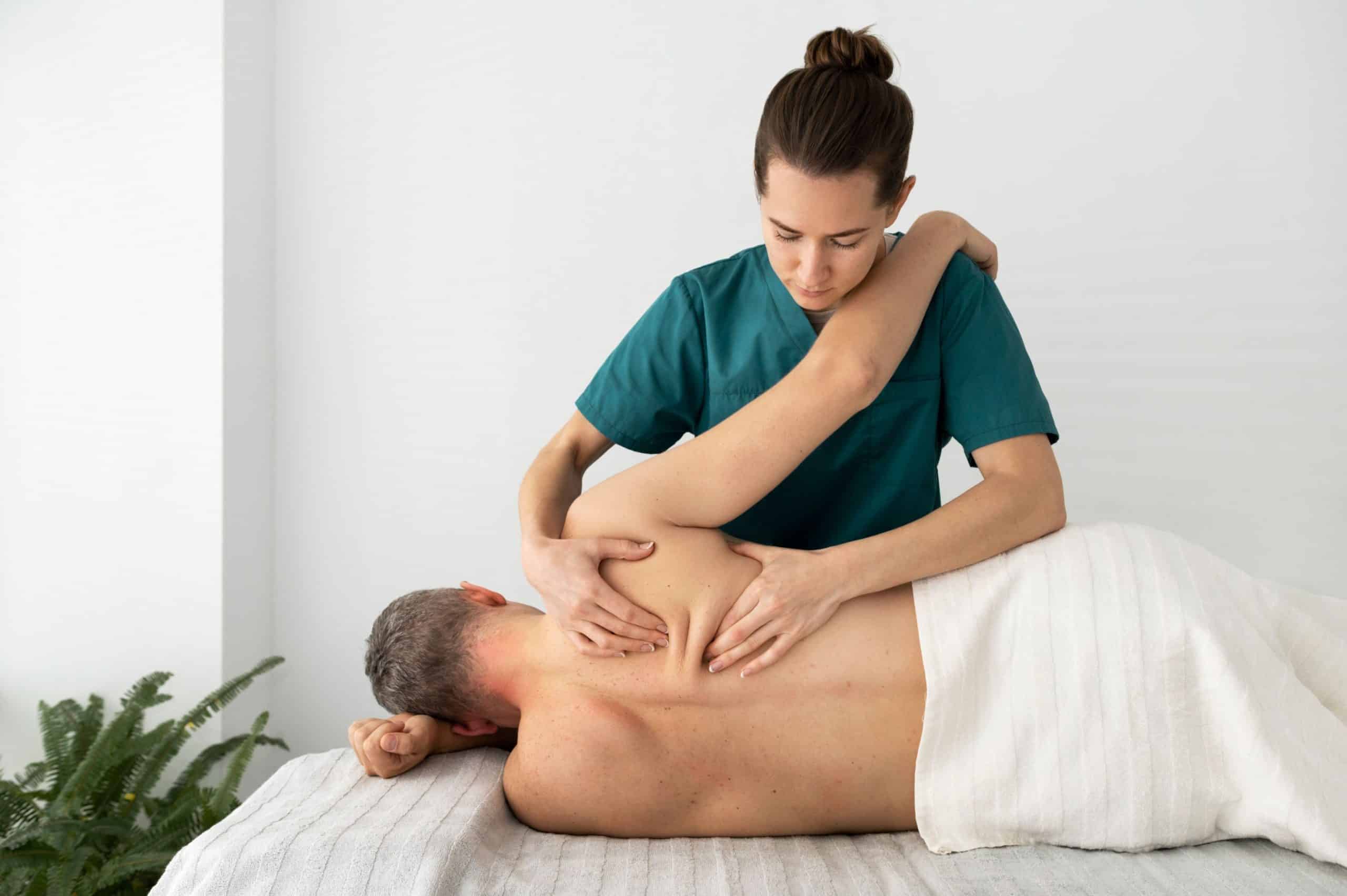
Deep Tissue Massage at Home: Why Pressure Requires a Professional Table
There is a version of deep tissue massage that feels genuinely therapeutic, and a version that just feels like someone pressing hard on your back. The difference is not always about the therapist’s ability. Very often, it comes down to the setup.
If you have ever booked a mobile massage and wondered why it did not quite deliver the depth you were hoping for, the answer is likely mechanical. Deep tissue work depends on leverage, positioning, and controlled force application. Without a proper treatment table, even a highly skilled therapist is working against themselves.
What deep tissue massage is actually trying to do
Deep tissue massage targets the deeper layers of muscle and the connective tissue that surrounds them. The aim is to release chronic tension held in structures that lighter pressure cannot reach. This includes the deeper fascial layers, muscle bellies under larger surface muscles, and areas where repeated use or poor posture has caused fibres to contract and adhere.
Reaching those structures requires sustained, controlled pressure applied at the right angle. That is not something that can be achieved with the therapist standing over someone lying on the floor, perching awkwardly beside a bed, or trying to adapt their technique around a surface that offers no support for their own body mechanics. The physics simply do not work in the therapist’s favour, which means the client does not get what they came for.
Why leverage is the missing variable
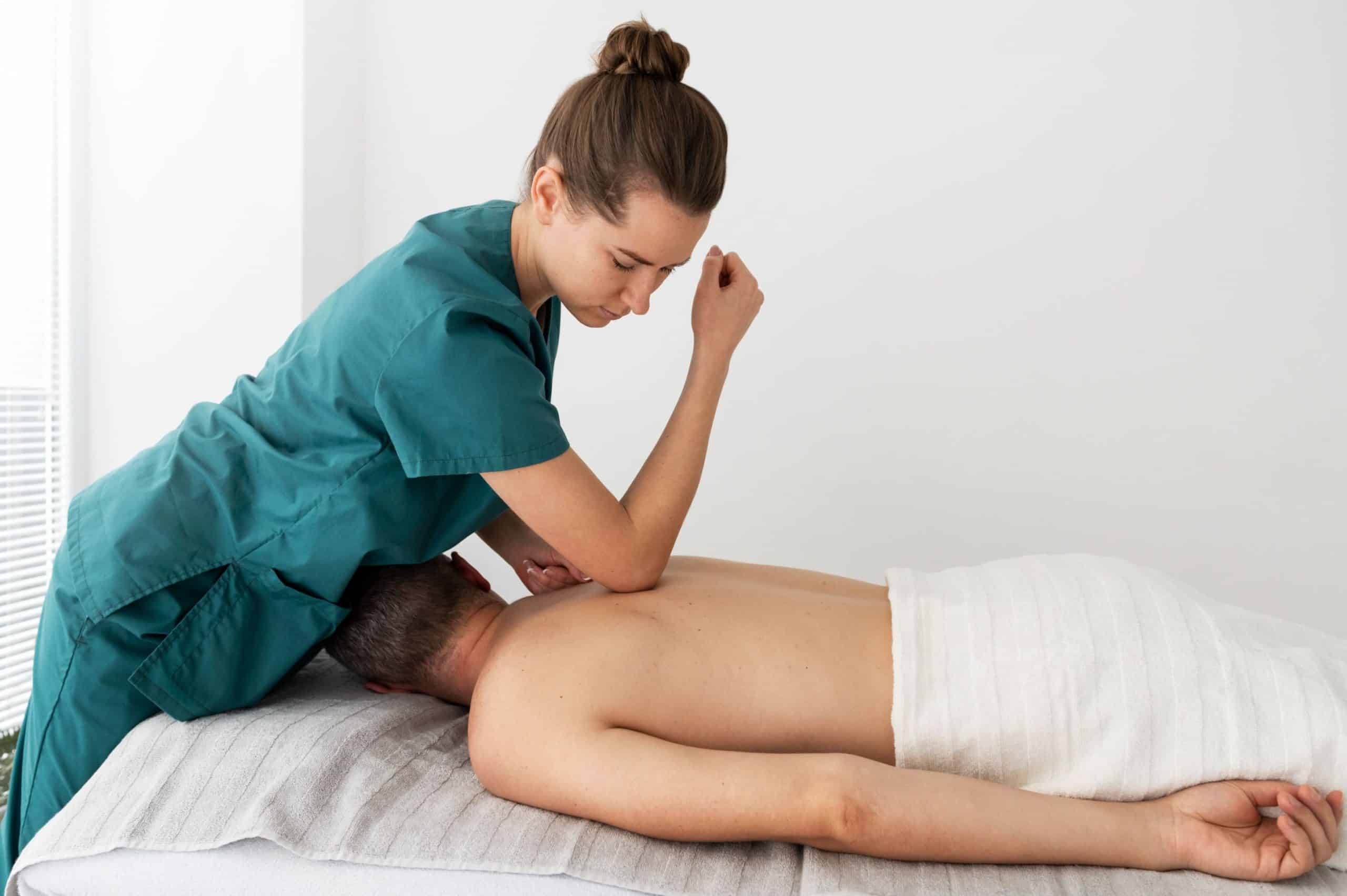
When a therapist works at a properly adjusted treatment table, they are able to use the full weight and movement of their body rather than relying on isolated muscle effort. This is the core principle behind effective deep tissue technique. The table height can be set so the therapist can lean into the work using their bodyweight, creating sustained, even pressure without straining.
This matters in two ways. First, the pressure the client feels is far more consistent. Rather than short, effortful pushes, the therapist can maintain prolonged contact across a stroke, which is what allows the tissue to soften and respond. Second, the therapist does not tire as quickly or compromise their own posture, which means their technique stays cleaner and more precise throughout the full session.
The angles used in deep tissue work, particularly for work on the back, glutes, hip rotators, and posterior chain, require the therapist to position their forearms, elbows, and thumbs at specific points relative to the muscle they are addressing. These angles change depending on which muscle group is being targeted, and achieving them consistently requires the client to be at a height and position that a table makes possible and a floor or sofa does not.
What the table does for the client
Beyond what it enables for the therapist, the treatment table changes the entire physical experience for the person receiving the massage. A professional table provides firm, even support across the full length of the body. This allows the muscles to fully disengage from postural holding, which is essential for deep work to be effective.
When someone is lying on the floor, the hard surface creates discomfort that keeps certain muscles engaged. When someone is on a soft mattress, the body sinks into the surface and the therapist loses the counterforce they need. A professional treatment table is designed specifically to sit in the middle: firm enough to provide resistance, cushioned enough to be comfortable over a sixty or ninety minute session.
The table also supports proper positioning for the client, including the use of bolsters under the knees or ankles, face cradle adjustment, and side-lying positions for pregnancy massage or work on the lateral hip. These positional details are not optional extras. They are part of how therapeutic massage is designed to be delivered.
The treatments that benefit most from a table setup
While any massage is more comfortable and more effective on a proper table, some treatments depend on it almost entirely. Here is where the difference is most pronounced:
- Deep tissue massage requires leverage and controlled pressure over sustained strokes. Without a table, the depth of work available is significantly reduced.
- Sports massage often involves active and passive stretching, joint mobilisation, and work across muscle bellies that need to be fully relaxed. This is extremely difficult to achieve on a floor setup.
- Brazilian lymphatic drainage and manual lymphatic drainage use very specific pressure sequencing and directional strokes. Precise positioning on a supportive surface is essential to the technique working as intended.
- Thai oil massage combines stretching elements with pressure and flow work that benefit from the elevated, stable surface a table provides.
- Pregnancy massage requires careful side-lying positioning with bolster support that only a professional table can provide safely.
How Zen Hut approaches this
Zen Hut was built around the table-based model for exactly this reason. Every booking includes the therapist bringing a professional treatment table to the customer’s home. This is not an add-on or an upgrade option. It is the standard.
The practical result is that a Zen Hut session at home can deliver genuinely therapeutic outcomes rather than a pleasant but limited approximation of one. Customers who have previously tried mobile massage services that arrive without a table often notice the difference immediately, both in the quality of pressure available and in how their body feels during and after the treatment.
Therapists on the Zen Hut platform are professionally trained, and their profiles are available to browse before booking. Customers can read bios, check which treatments are offered, and review feedback from previous clients before confirming their appointment. Bookings are prepaid online and can be made through the website as a guest or through the Zen Hut app, which also includes stored booking details, Zen Points rewards, and in-app messaging for app bookings.
A note on what deep tissue should feel like
Effective deep tissue work is not simply about the amount of pressure applied. It is about precise, purposeful work at the right depth, sustained long enough for the tissue to respond. The sensation during a well-executed deep tissue session sits somewhere between a productive discomfort and a sense of release. It should never feel brutalising or vague.
The table is what makes precision possible. It is what allows the therapist to hold a position, build pressure gradually, maintain contact through a stroke, and move with intention rather than effort. For anyone who has been underwhelmed by at-home massage in the past, the absence of a proper table is almost always part of the explanation.
Frequently Asked Questions
Yes, when the setup is right. The key variable is whether the therapist has a professional treatment table. With one, the therapist has the leverage, positioning, and surface support needed for effective deep work. Without one, the quality of deep tissue pressure is inherently compromised.
Some services operate a no-table model by design, often to reduce setup time or keep things lighter for the therapist in transit. This suits relaxation-focused treatments well, but it does limit what is achievable with deeper therapeutic work. Zen Hut's model is specifically table-based.
A professional treatment table requires a clear space of roughly two metres by one metre. Most living rooms, bedrooms, or spare rooms can accommodate this. The therapist sets up and packs down the table as part of the booking.
Yes. Deep tissue massage is available to book through the Zen Hut website and app. You can browse therapist profiles, check availability, and confirm your appointment with prepaid online payment. The app also lets you build Zen Points, save your booking details, and message your therapist directly for app bookings.
Deep tissue massage is not typically recommended during pregnancy. Zen Hut offers a dedicated pregnancy massage treatment, which uses appropriate pressure and positioning with bolster support on the treatment table.